MandibularTrapezoidal
Mandibular Second Molar
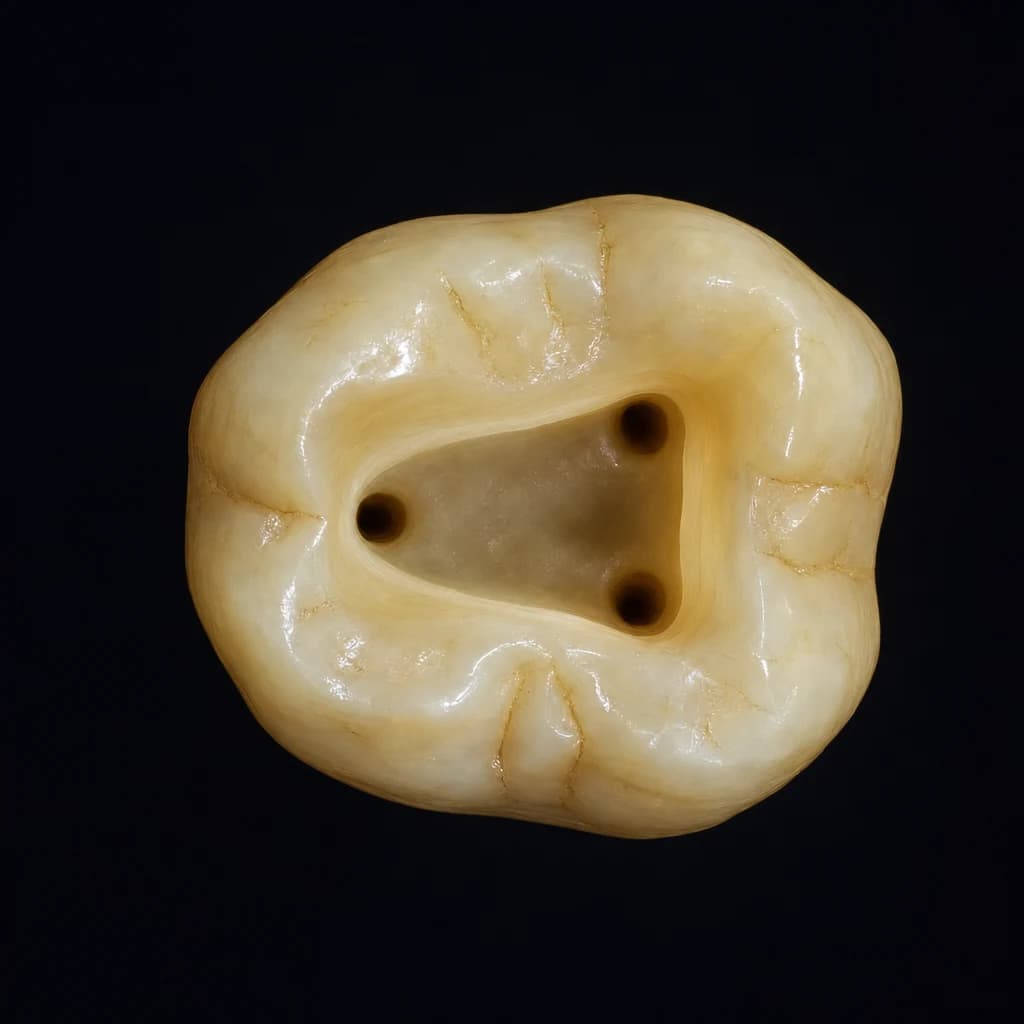
Three-canal mandibular molar access — mesiobuccal, mesiolingual and distal orifices
Average Length19.8 mm
Root Development14-15 years
Universal #18, 31
FDI #37, 47
Access Cavity Design
ShapeTrapezoidal
OrientationCompact trapezoidal; similar to first molar but smaller and more mesially positioned
Entry PointMesial two-thirds of occlusal surface
Landmarks
- Mesial pit as primary reference
- Orifice pattern more compact than first molar
Do Not Invade
- Mesial marginal ridge
- Lingual wall (especially thin in C-shaped variants)
Canal Anatomy
Configurations
2 roots, 3 canals60-80%
2 roots, 2 canals~13%
C-shaped anatomy0.6-45.5% (ethnic)
Radix Entomolaris (extra distolingual root)1.4-2% (lower than first molar)
Canal Positions
MBMesiobuccal
May appear as single oval with ML in fused roots
MLMesiolingual
May be fused with MB
DDistal
Typically single canal
CC-Shaped
Continuous ribbon-shaped orifice from MB to D
Danger Zones
- ⚠Thin lingual wall in C-shaped canals - HIGH perforation risk
Clinical Tips
Tip
C-shaped appearance: Ribbon-shaped orifice connecting MB to D (180 degree arch) — pathognomonic finding
Technique
For C-shaped: Locate main canals first, then clean connecting isthmuses with activated irrigation
Technique
Thermoplasticized GP (warm vertical or carrier-based) mandatory for C-shaped obturation — lateral compaction inadequate
Anatomical Variations
C-Shaped Canal
0.6-45.5%Single fused root with ribbon-shaped canal system
Access Modification: Expect continuous C-shaped or semicolon orifice, avoid over-extension
Ethnic Variation
Korean31.3-45.5%
Chinese0.6-41.27%
Burmese22.4%
Caucasian<5%
Other teeth in the atlas
Maxillary